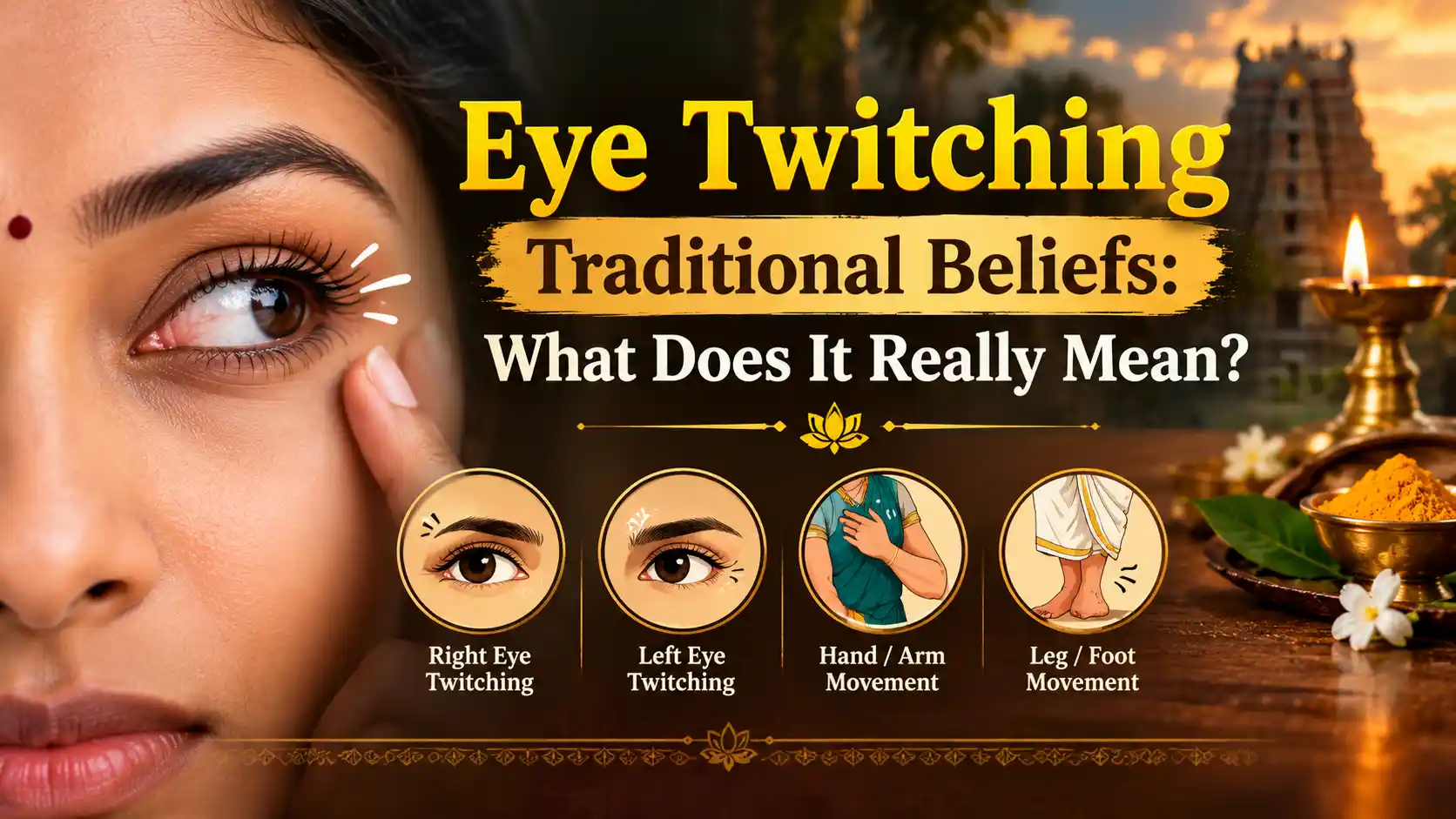
Have you ever been sitting quietly when suddenly your eyelid starts fluttering on its own? Almost instantly, someone nearby turns to you and says, “Hey, your eye is twitching! Something is about to happen.”
Across different cultures—and especially deeply rooted in traditional Indian households—every little physical twitch or movement is believed to carry a hidden message from the universe. But what does traditional folklore actually say about eye twitching (kan thudipathu)? Let’s dive into the fascinating beliefs passed down through generations.
1. The General Rule: Right vs. Left Eye
In traditional astrological beliefs and cultural folklore, the interpretation of an eye twitch largely depends on two things: which eye is twitching and whether the person is a man or a woman.
For Men:
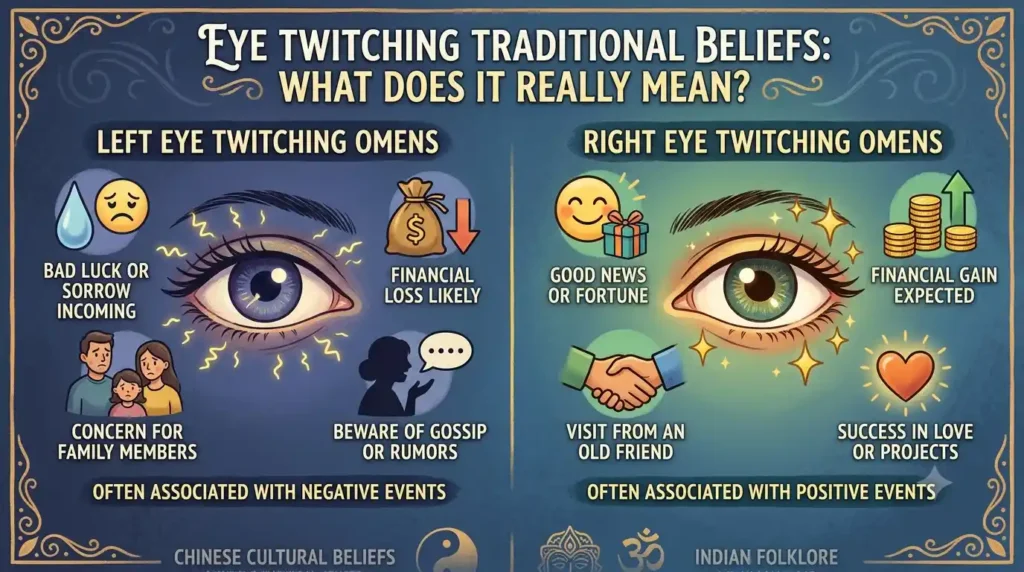
- Right Eye Twitching: Generally considered very auspicious. It is believed to bring good news, financial gains, or success in upcoming ventures.
- Left Eye Twitching: Often interpreted as a sign of impending trouble, arguments, or unnecessary stress.
For Women:
- Left Eye Twitching: Considered lucky and favorable. Traditional belief holds that it brings good fortune, happiness, or positive news regarding family.
- Right Eye Twitching: Often seen as a warning sign indicating upcoming obstacles or emotional distress.
2. Upper Lid vs. Lower Lid Meanings
Beyond just the right and left eye, traditional lore also breaks down predictions based on which part of the eyelid is moving:
- Upper Eyelid: Many believe that a twitching upper lid signifies meeting an old friend or receiving unexpected guests at home.
- Lower Eyelid: Often associated with emotional outbursts, unexpected expenses, or shedding tears of sorrow (or sometimes tears of joy, depending on the side).
3. Cultural Tradition vs. Modern Reality
While these traditional predictions make for great storytelling and playful conversations with elders, modern science tells us a different story. Medical experts explain that eye twitching (myokymia) is usually caused by simple everyday factors like lack of sleep, high caffeine intake, eye strain from screens, or physical stress.
However, looking at it through lens, cultural beliefs remain an important part of our heritage. They give us a glimpse into how ancient societies tried to find patterns and meaning in everyday bodily occurrences.
Final Thoughts
Whether you view eye twitching as a quirky omen of the future or simply a sign that you need a good night’s sleep, it remains a fun and relatable topic of conversation.
The next time your eyelid starts fluttering, you can smile, think of what the elders used to say, and maybe take it as a friendly reminder to relax and take a deep breath!