When the Soul Becomes Silent, the Eyes Begin to Pray
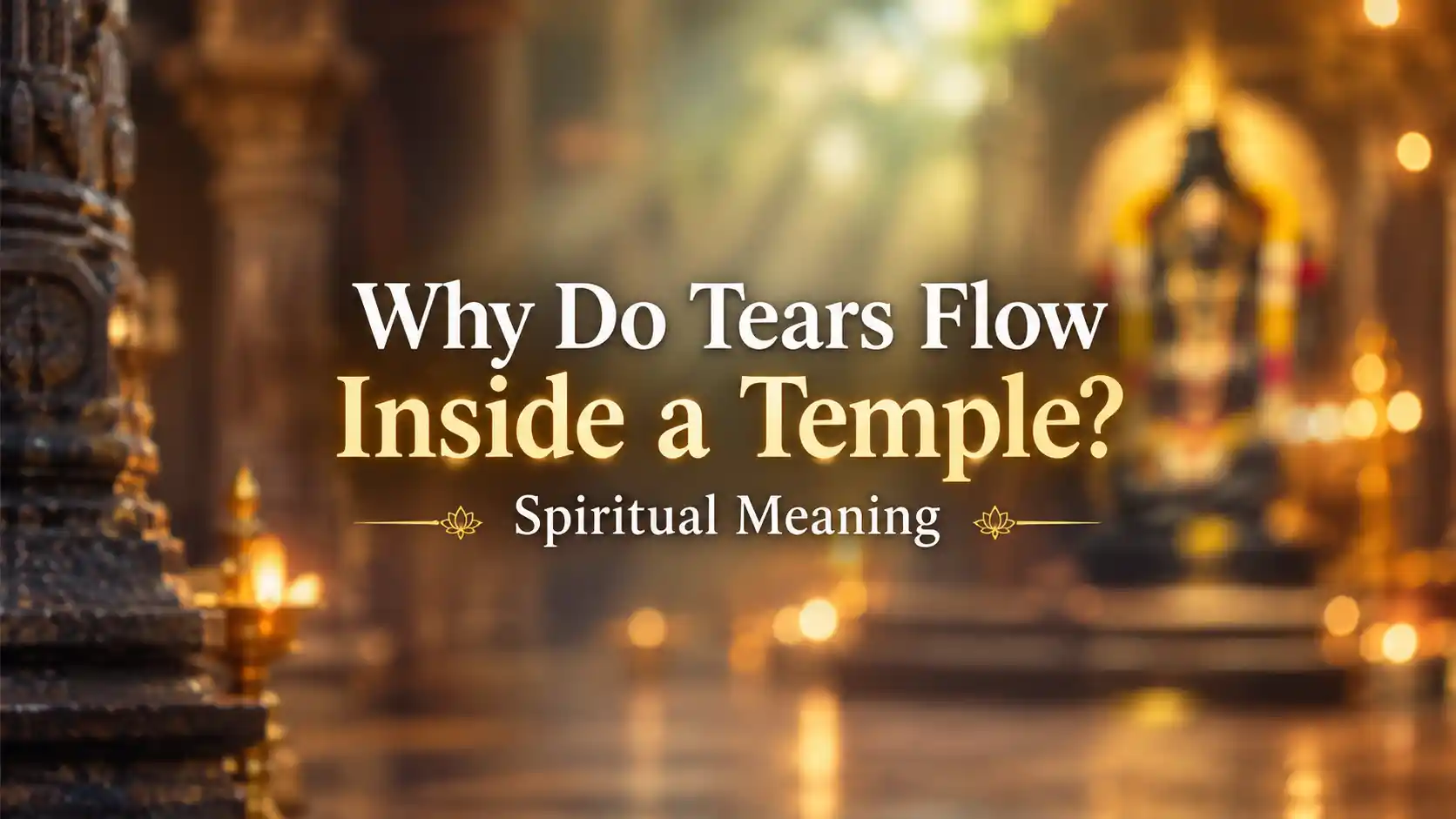
Have you ever walked into a temple with a completely normal heart, only to find your eyes suddenly filling with tears when you stand before the deity?
No sadness.
No painful memory.
No obvious reason.
Just one glance at the divine form, the gentle glow of the sacred lamp, the sound of the temple bell, or the fragrance of flowers and incense can sometimes stir something deep within.
The lips become silent.
The mind becomes still.
But the eyes begin to speak.
In spiritual traditions, such moments may be associated with deep devotion, surrender, gratitude and emotional connection with the divine.
Perhaps that is why temple tears can feel so different.
They are not always tears of sorrow. Sometimes, they may be tears that come when the heart finally finds a quiet place to release what it has been carrying.
When the Heart Stands Before the Divine
Outside the temple, we carry many identities.
We are someone’s child, someone’s friend, a student, a parent, a partner or a family member.
We smile.
We stay strong.
We continue our responsibilities.
But before the deity, something can feel different.
For a few moments, there may be no need to prove anything.
There is no need to explain your pain.
There is no need to hide your fears.
You simply stand there with your heart and the divine presence before you.
When a person feels free enough to surrender, emotions may naturally surface.
Sometimes surrender does not come through words.
It comes through tears.
Bhakti Paravasam: When Devotion Touches the Deepest Corner of the Heart
In devotional traditions, intense spiritual emotion may be described as bhakti paravasam, a state of being deeply absorbed in devotion.
A person may experience an overwhelming sense of closeness, gratitude or reverence towards the deity.
The feeling can become so deep that words seem unnecessary.
The folded hands say enough.
The closed eyes say enough.
And sometimes, one silent tear says everything.
It can feel as though the heart is saying:
“I have come to you.”
“I trust you.”
“Thank you for bringing me this far.”
The Sacred Moment When an Unspoken Prayer Awakens
There are prayers we tell everyone.
And then there are prayers we tell only God.
A hope we cannot explain.
A fear we cannot express.
A dream we are afraid to speak about.
A question to which we have no answer.
When we stand before the deity, those silent prayers may suddenly feel close to the surface.
The eyes may become wet because some deeply held emotions have found a quiet moment to emerge.
Some prayers are not spoken aloud.
They are felt.
They are surrendered.
They are carried quietly within the heart.
And sometimes, the tear itself can feel like a prayer.
From Inner Burden to Divine Surrender
Imagine carrying a heavy thought for a long time.
Then you enter a temple.
You hear sacred chanting.
You see the lamp glowing.
You stand before the deity.
For a few moments, you stop trying to control every thought.
You simply surrender.
“I have done what I can. Now, let me place the rest before you.”
That feeling can bring emotional relief for some people.
The situation may not change immediately.
But something inside the person may change.
The heart may feel lighter.
The mind may become calmer.
Sometimes surrender does not remove a difficult situation. Instead, it may change the way a person carries it.
Tears of Gratitude: When the Heart Says Thank You
Not every temple tear comes from difficulty.
Sometimes it may come from gratitude.
A person may remember everything they have overcome.
A difficult period that finally passed.
A prayer that gave them hope.
A family member who stood beside them.
A blessing they never expected.
Suddenly, they look at the deity and think:
“Thank you.”
That simple feeling can become so powerful that the eyes fill with tears.
For many devotees, gratitude itself is a deeply meaningful form of prayer.
The Temple Atmosphere: Where Every Sense Awakens
Why can a temple sometimes create such a powerful emotional experience?
Think about the atmosphere.
The ringing of the bell.
The glow of the sacred lamp.
The fragrance of flowers.
The sound of devotional chanting.
The sight of the deity.
The peacefulness of the sanctum.
All of these can draw our attention away from the noise of everyday life.
When the outside world becomes quieter, the inner world may become easier to notice.
Feelings that remained hidden beneath busy routines may naturally come forward.
This does not necessarily mean that something supernatural has happened. Sometimes, a peaceful and meaningful environment can simply give us the space to experience emotions that we have been holding inside.
A Temple Can Awaken Forgotten Memories
Sometimes the tears may have another story.
Perhaps that temple was where you once came with your parents.
Perhaps someone you love used to pray there.
Perhaps you visited that place during an important moment in your life.
One familiar sight can bring back an entire collection of memories.
The same deity.
The same bells.
The same flowers.
But suddenly, the heart remembers a different version of you.
Those memories can bring tears even when you were not consciously thinking about them.
The Divine Form That Touches the Heart
For devotees, the form of the deity itself can create a deep emotional connection.
The peaceful eyes of the deity.
The sacred ornaments.
The flowers.
The glowing lamp.
The divine symbols.
For a devotee of Lord Murugan, even the sight of the Vel may become a reminder of courage, wisdom and divine protection according to traditional belief.
For another devotee, it may be the compassionate form of their chosen deity that touches the heart.
The eyes see the deity, but devotion allows the heart to experience the divine in a deeply personal way.
Tears Are Not a Measure of Devotion
There is something important to remember.
Not everyone cries in a temple.
And that is completely natural.
One person may become emotional.
Another may feel peaceful.
Someone else may smile.
Another may simply stand silently.
Devotion does not have one appearance.
Tears do not prove that someone is more devoted.
And the absence of tears does not mean that devotion is missing.
Every person experiences spirituality and emotion differently.
When the Eyes Speak What the Lips Cannot
Perhaps this is the most beautiful way to understand temple tears.
A person may enter carrying fear, hope, gratitude, memories, questions and faith.
For one brief moment, everything meets before the divine.
The person may not know what to say.
So the eyes say it instead.
Some prayers are spoken.
Some prayers are whispered.
And some prayers simply become tears.
The Beautiful Silence After the Tears
If tears come while praying, there is no need to feel embarrassed.
Simply pause.
Take a gentle breath.
Look towards the deity.
Let the moment pass naturally.
You do not have to force yourself to understand every emotion.
Sometimes the heart simply needs a quiet place to release what it has been holding.
And after the tears, there may come a sense of peace.
A feeling that says:
“I have said what I needed to say.”
Even without saying a single word.
The Spiritual Message Hidden in One Tear
Maybe the deepest lesson is not about exactly why the tears appeared.
Maybe it is about what happens after them.
You entered with a restless mind.
You prayed.
You surrendered.
You became quiet.
And you walked out feeling a little lighter.
The problem may still be waiting.
The answer may not have arrived.
But your heart may have found a moment of peace.
And sometimes, that moment itself can feel like a blessing.
When You Stand Before God
The next time you enter a temple, do not search for a special feeling.
Simply be present.
Look at the deity.
Listen to the bell.
Notice the peaceful atmosphere.
Close your eyes.
And let your prayer come naturally.
Whether tears come or not, let the prayer be sincere.
Spirituality does not need to be measured by the intensity of an emotion.
It can also be found in faith, surrender, gratitude, silence and inner peace.
The Final Divine Thought
Sometimes we think a prayer needs beautiful words.
But perhaps it does not.
A prayer can be a folded hand.
A closed eye.
A grateful smile.
A silent surrender.
Or a single tear.
Some feelings are simply too deep for language.
And when words become silent, the eyes may begin to pray.
So, if your eyes ever fill with tears before the deity, do not immediately think of those tears as sadness.
They may simply be a moment when your heart feels deeply moved.
A moment of devotion.
A moment of surrender.
A moment of gratitude.
A moment of inner peace.
And perhaps, when you finally walk out of the temple, you may carry something more precious than an answer.
You may simply carry a lighter heart.