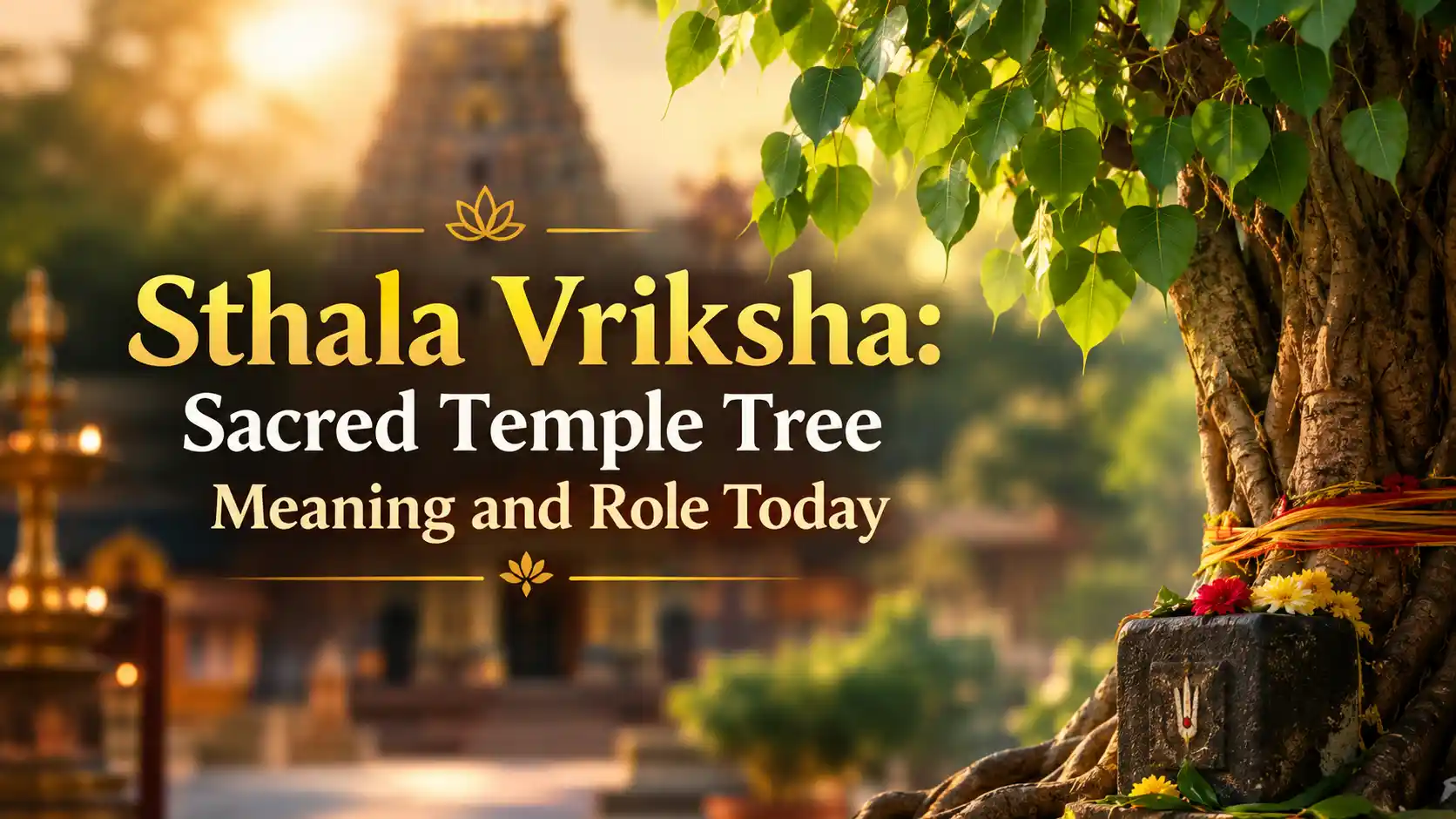
When we visit a traditional Hindu temple, our attention often goes first to the towering gopuram, the beautiful stone carvings or the deity inside the sanctum. But have you ever noticed the sacred tree growing within the temple grounds?
Known as the Sthala Vriksha, this tree holds a special place in many Hindu temples, particularly in South India. It is not simply a part of the temple’s landscape. It is connected to the temple’s identity, religious traditions, local legends and the longstanding relationship between spirituality and nature.
Understanding the importance of Sthala Vriksha helps us appreciate an often-overlooked part of Hindu temple heritage: the sacred role of trees in religious life and environmental conservation.
What Is Sthala Vriksha?
The term Sthala Vriksha comes from Sanskrit. Sthala refers to a place or site, while vriksha means tree. Together, the term refers to a sacred tree associated with a particular place, especially a Hindu temple.
In Tamil, it is commonly called the Sthala Virutcham or Sthala Vriksham.
Many traditional temples have a tree associated with their presiding deity and local history. Depending on the temple, this may be a neem tree, bilva tree, peepal tree, mango tree or another species regarded as sacred.
The connection between a temple and its tree may be preserved through traditional stories, religious texts, customary worship and local community practices.
In some cases, the tree is so closely associated with the temple’s identity that its name reflects the tree or the sacred grove once connected with that place.
The specific tree, its history and the rituals associated with it vary from temple to temple.
Why Is Sthala Vriksha Important in Hindu Temples?
The significance of Sthala Vriksha extends beyond its physical presence. It brings together religious belief, cultural memory, community identity and respect for the natural world.
1. A Sacred Connection Between Nature and the Divine
One of the most important aspects of Sthala Vriksha is the connection it represents between nature and spirituality.
In Hindu traditions, trees can be associated with deities, sacred stories, auspiciousness and the sustaining forces of life. Worshipping or honouring a particular temple tree expresses reverence for the natural world within a religious setting.
For devotees, the tree may serve as a reminder that the sacred is not experienced only through stone structures and ritual objects. Nature itself can become part of a meaningful spiritual experience.
The precise religious interpretation depends on the temple’s tradition, but the underlying relationship between nature and sacred space is an important feature of many Indian religious practices.
2. Preserving Temple History and Local Legends
Every historic temple has its own story. Some stories describe the deity appearing beneath a particular tree, while others connect the site to ancient forests, sages or local events.
The Sthala Vriksha helps preserve these stories across generations.
When temple priests, local guides and community elders explain why a specific tree is revered, they pass on knowledge about the site’s history and religious identity.
For visitors, learning about the temple tree can add another layer of understanding to a pilgrimage. Instead of seeing the tree as an ordinary feature of the courtyard, they begin to recognise its place in the temple’s cultural heritage.
It is important, however, to distinguish traditional legends from independently documented historical facts. Both can be meaningful, but they represent different kinds of knowledge.
3. A Living Symbol of Growth and Renewal
Trees naturally represent growth, resilience and continuity. They begin as small saplings, develop over many years and provide shade, shelter and nourishment to living beings.
In the context of Sthala Vriksha, these qualities can carry spiritual meaning.
A mature temple tree may have witnessed generations of worshippers, festivals, family prayers and community gatherings. Its continued presence creates a tangible link between the past and the present.
For devotees, it can symbolise continuity, hope and renewal. For younger generations, it offers a living reminder that religious heritage includes the natural environment as well as buildings and sculptures.
4. Environmental Protection and Biodiversity
The importance of Sthala Vriksha also has a practical environmental dimension.
A healthy tree can provide shade, support birds and insects, contribute to local biodiversity and help moderate the immediate surroundings. Older trees may also provide valuable habitat for a variety of organisms.
When a temple community protects its sacred tree, it can help preserve an important part of the local environment.
The benefits depend on the tree species, its condition and the surrounding ecosystem. A single tree cannot replace a forest, but protecting established trees and planting suitable native species can contribute to broader conservation efforts.
This is one reason the Sthala Vriksha tradition remains relevant today: cultural reverence can encourage people to care for living trees over long periods.
5. A Focus for Prayer and Devotional Practices
In some temples, devotees offer prayers near the Sthala Vriksha, walk around it or participate in customary rituals associated with the tree.
Depending on local tradition, practices may include offering flowers, lighting lamps at designated locations or tying sacred threads. Not every temple follows the same customs, and visitors should respect the rules of the particular site.
These practices allow devotees to express gratitude, devotion and personal hopes within a familiar religious setting.
The tree therefore becomes part of the lived experience of the temple rather than merely an object of historical interest.
Sacred Trees Commonly Associated with Hindu Temples
Different trees are revered in different temples. The species associated with a particular Sthala Vriksha should always be confirmed through the temple’s own records or a reliable local source.
Bilva Tree
The bilva tree, botanically known as Aegle marmelos, is strongly associated with the worship of Lord Shiva. Its leaves are traditionally offered during Shiva worship.
In temples where a bilva tree is the Sthala Vriksha, it reflects the close relationship between the deity, ritual offerings and sacred plant traditions.
Neem Tree
The neem tree (Azadirachta indica) is revered in various regional Hindu traditions, including traditions associated with Amman and other forms of the Goddess.
Neem trees are also valued for their shade and ecological role. Their religious significance, however, depends on the specific temple and local custom.
Peepal Tree
The peepal tree (Ficus religiosa) has an important place in several Indian religious traditions. Its longevity, broad canopy and distinctive leaves have made it a recognised symbol of sacredness in many communities.
Some temples and sacred sites associate this tree with particular devotional practices.
Mango Tree
The mango tree (Mangifera indica) is associated with auspiciousness and fertility in several Indian cultural and religious traditions.
Certain temples are especially known for their association with mango trees. The significance of a particular tree should be understood through the temple’s own history rather than assumed to be identical everywhere.
Marudhu Tree
Marudhu trees, commonly associated with Terminalia species in South Indian temple traditions, are important in certain regional sacred landscapes.
Because common names can refer to different botanical species across regions, identifying a temple’s tree accurately is important for historical and conservation purposes.
These examples illustrate the diversity of sacred trees in Hindu temple culture. They should not be taken to mean that every Shiva temple has a bilva tree or that every temple follows the same pattern.
The Relationship Between Sthala Vriksha and Temple Architecture
Traditional Hindu temples are often understood as carefully organised sacred spaces. The gopuram, mandapas, sanctum and surrounding courtyards each have their own architectural and religious roles.
The Sthala Vriksha adds a living element to this setting.
Depending on the temple, the sacred tree may stand in an outer courtyard, within a temple enclosure or on a designated platform. Some temples provide space around the tree for devotees to gather or perform customary rituals.
Its location and surroundings can reflect the history of the temple and the practical needs of worshippers.
Unlike a stone sculpture, the tree continues to grow and change. It requires suitable soil, water, protection from physical damage and appropriate care. This makes the maintenance of a Sthala Vriksha both a cultural responsibility and an environmental one.
Sthala Vriksha and Tamil Temple Traditions
Tamil Nadu is particularly rich in temples associated with sacred trees. In many places, the temple tree forms an important part of local identity and pilgrimage traditions.
Traditional temple histories, devotional literature and local accounts may describe the connection between a deity and a particular tree or sacred grove.
The relationship can be especially interesting in older temple towns, where the names of places, the identity of deities and the surrounding landscape preserve traces of earlier natural environments.
When visiting a Tamil temple, it is worth asking about the Sthala Virutcham along with the temple’s main deity and architectural history.
A reliable temple guide or official temple source can often explain the tree’s name, its traditional association and the customary practices connected with it.
This approach makes a temple visit more informative while helping preserve local knowledge for future generations.
How Can We Protect Sthala Vriksha Trees?
Respect for sacred trees becomes more meaningful when it is supported by practical care.
1. Protect the Roots and Surrounding Soil
Avoid damaging roots, compacting the soil unnecessarily or covering the root zone with unsuitable materials. Mature trees need adequate space and healthy soil to survive.
2. Avoid Harmful Offerings and Materials
Do not leave plastic, synthetic decorations, non-biodegradable offerings or waste around the tree. Follow the temple’s guidance on permitted offerings and disposal.
3. Encourage Scientific Tree Care
Old or damaged trees may need assessment by a qualified arborist or an appropriate horticultural expert. Traditional respect and modern tree-care knowledge can work together to support long-term survival.
4. Document the Tree’s Identity
Recording the local name, botanical identification, age estimates where professionally assessed, traditional stories and historical references can help preserve knowledge about the Sthala Vriksha.
Photographs and oral histories may also be valuable, provided they are collected respectfully and with permission where required.
5. Plant Suitable Trees When Necessary
If a sacred tree dies or becomes unsafe, any replacement should follow the temple’s tradition and suitable horticultural advice. The same species may be appropriate in some cases, but local climate, soil, available space and conservation considerations also matter.
A new sapling cannot immediately replace an old tree’s ecological value. Protecting existing mature trees whenever possible is therefore especially important.
How to Appreciate a Sthala Vriksha During Your Temple Visit
The next time you visit a temple, take a moment to notice its sacred tree.
- Find out the tree’s local name and botanical identity.
- Ask about its connection to the presiding deity or temple legend.
- Observe whether a designated space or platform has been created around it.
- Learn about any customary worship practices and follow local instructions.
- Notice the birds, shade and other signs of life associated with the tree.
- Avoid damaging the bark, roots or branches, and leave the surrounding area clean.
These simple steps help connect the spiritual meaning of the tree with its physical and ecological importance.
You may discover that the temple’s story is expressed not only through inscriptions and sculptures but also through a living tree that has become part of the community’s shared memory.
Frequently Asked Questions About Sthala Vriksha
What does Sthala Vriksha mean?
Sthala Vriksha refers to a sacred tree associated with a particular place, especially a Hindu temple. The tree may be connected with the presiding deity, traditional stories and local worship practices.
Why is Sthala Vriksha important in Hindu temples?
It preserves religious traditions, supports the temple’s cultural identity and represents the relationship between spirituality and nature. Sacred trees can also provide practical ecological benefits.
Which tree is considered the Sthala Vriksha?
There is no single tree that serves as the Sthala Vriksha for all Hindu temples. The species varies by temple and regional tradition. Bilva, neem, peepal, mango and marudhu are among the trees associated with particular sacred sites.
Is Sthala Vriksha worship practised in Tamil Nadu?
Yes. Sacred temple trees form part of many Tamil Nadu temple traditions. Their names, associated deities and rituals vary from site to site.
What is the environmental significance of Sthala Vriksha?
Temple trees can provide shade, habitat and other local ecological benefits. Protecting them can also help preserve traditional knowledge and encourage communities to value trees as part of their cultural heritage.
How can devotees protect a temple’s sacred tree?
Devotees can avoid damaging the tree, keep its surroundings clean, follow temple guidelines and support appropriate conservation and maintenance efforts.
Conclusion: Sthala Vriksha as a Living Heritage
The importance of Sthala Vriksha lies in the way it connects spirituality, history, community and nature.
A sacred temple tree may preserve the memory of a local legend, provide a focal point for devotional practices and offer shade and habitat to other living beings. It reminds us that a temple’s heritage is not limited to its stone architecture; it can also include the natural life growing within its sacred grounds.
The next time you visit a Hindu temple, look for the Sthala Vriksha and learn the story behind it. Understanding that tree can reveal a meaningful part of the temple’s identity while encouraging a deeper appreciation of India’s living cultural and environmental heritage.
Protecting these trees is one way to ensure that this heritage continues to be experienced by future generations.