Have you ever wondered whether the direction of God photos in your home really matters?
In many Indian households, the pooja room is more than just a place to light a lamp. It is where families begin their mornings with prayer, express gratitude, and find a few moments of peace during a busy day.
Our elders often followed certain traditions when arranging pictures of Hindu gods and goddesses. One such tradition is choosing the right direction for the home temple and placing deity photos respectfully.
According to traditional Vastu Shastra beliefs, the direction of the pooja room and the way God photos are arranged are important considerations. Here is a simple guide to help you understand these practices and apply them in your home.
Which Is the Best Direction to Place God Photos at Home?
According to traditional Vastu beliefs, the north-east direction, also known as the Ishanya corner, is generally preferred for a home pooja room. The east and north directions are also commonly considered suitable alternatives.
If you are arranging a small pooja space in your house, consider these traditional guidelines:
- North-East: Traditionally preferred for the home temple or pooja area.
- East: A popular choice because of its association with the rising sun and new beginnings.
- North: Another direction commonly considered suitable for a prayer space.
These are traditional beliefs rather than scientifically established rules. If your home does not have space in the north-east corner, there is no need to worry. You can create a clean, peaceful prayer area in a convenient location.
Which Direction Should the God Photos Face?
This is where many people get confused. The direction in which you place a photograph and the direction in which the deity faces are not necessarily the same.
In many Vastu-based household practices, people arrange the pooja space so that they can sit facing east or north while praying.
For example, if you prefer to face east during your daily prayers, you may place the deity photo on the west wall, facing towards you. Similarly, the arrangement can be adjusted according to the available space in your home.
The important thing is to understand the difference between the direction of the wall, the direction of the deity image, and the direction in which you sit for prayer.
Different families and traditions may follow slightly different guidelines, so choose an arrangement that suits your home and religious practice.
How to Arrange God Photos in Your Home Temple
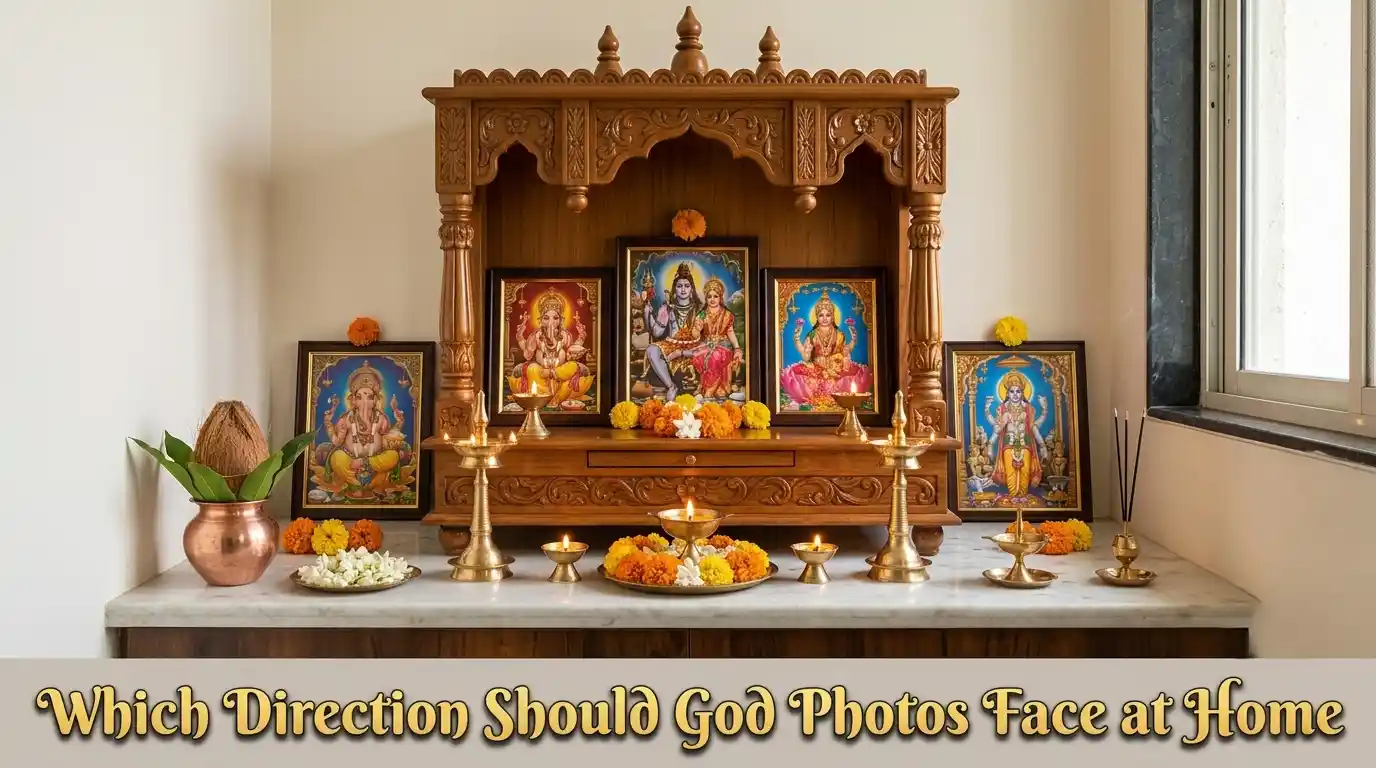
A home temple does not have to be large or expensive to feel special. Even a small shelf can become a meaningful place for daily prayer when it is arranged with care.
Here are a few simple practices to follow.
1. Keep the Pooja Space Clean
Regularly remove dust from the frames, clean the shelf, and replace wilted flowers. Keeping the space neat is a simple way to show respect for the deities you worship.
2. Place Photos at a Comfortable Height
Arrange the main deity photo at a height that allows you to see it comfortably while sitting or standing for prayer. Avoid placing framed images directly on the floor.
3. Avoid Overcrowding the Space
You do not need to display every religious picture in one small area. Choose the deities your family regularly worships and arrange their photos neatly.
A simple, organised pooja space is often easier to maintain than one filled with too many frames and decorative items.
4. Give Each Photo Enough Space
Arrange the pictures so that they are easy to see and clean. If your family follows a particular tradition about the placement of different deities, you can continue following that practice.
5. Use Lamps and Incense Carefully
Lighting a diya is part of daily worship in many Hindu homes. Place it on a stable, heat-resistant surface, away from curtains, paper decorations, and other flammable materials. Never leave a burning lamp unattended.
Can You Keep God Photos in the Living Room?
Yes. Many families keep a framed picture of their chosen deity in the living room, especially when there is no separate pooja room.
If you choose this arrangement, select a clean and respectful place where the photograph will not be easily disturbed. A dedicated shelf or a suitable wall can work well.
Traditional Vastu recommendations may favour particular directions, but the layout of every home is different. If a separate prayer room is not possible, you can still maintain a small devotional space in your living room.
The aim is to make prayer a natural part of everyday life without making your home arrangement unnecessarily complicated.
Is It Okay to Keep God Photos in the Bedroom?
Some traditional households prefer to keep deity photos in a separate pooja room rather than in the bedroom. However, modern homes may not always have enough space for a dedicated prayer area.
If you need to keep a small devotional picture in your bedroom, consider your family customs, personal comfort, and the space available. Keep it in a clean and respectful position rather than placing it where it may be damaged or neglected.
There is no need to feel anxious if your home does not perfectly match every traditional recommendation. Different customs exist, and practical living arrangements also matter.
Which Places Should You Avoid When Placing God Photos?
When arranging your home temple, it is helpful to avoid locations where the photographs may become dirty, damaged, or difficult to maintain.
Consider the following practical points:
- Avoid placing photos where water, cooking oil, or smoke can easily damage them.
- Do not leave framed deity pictures directly on the floor.
- Avoid unstable shelves or locations where frames can fall.
- Keep the prayer area free from unnecessary clutter.
- Place lamps and incense away from flammable materials.
- Choose a location where you can clean and maintain the photos regularly.
Some Vastu traditions also recommend avoiding locations such as the area directly beneath a staircase or a wall shared with a bathroom. If you want to follow these specific customs, consider them while planning your pooja space.
Do the Right Directions Bring Peace and Prosperity?
Many people believe that following Vastu principles while arranging a home temple helps create a harmonious atmosphere. For families who follow these traditions, choosing a suitable direction can make the prayer space feel more meaningful.
However, it is important not to treat the direction of a photograph as a guarantee of wealth, success, health, or happiness. These outcomes depend on many factors, including personal decisions, circumstances, and practical efforts.
For many devotees, the deeper value of daily worship lies in gratitude, discipline, hope, and the time they spend reflecting on their beliefs.
A peaceful home is built through everyday actions as well as spiritual practices. Kindness among family members, a clean living space, and a few quiet moments for prayer can all contribute to a positive daily routine.
Frequently Asked Questions
1. Which direction is best for a pooja room at home?
According to traditional Vastu Shastra, the north-east corner is generally preferred for a home pooja room. The east and north are commonly considered alternatives when the north-east is not available.
2. Should God photos face east or west?
The answer depends on the arrangement of your prayer space and the tradition you follow. Some households arrange deity photos so that devotees face east while praying, with the images facing west.
3. Can I place God photos on the north wall?
Yes, many households use the north wall for their prayer area. Consider the available space, the direction you prefer to face during prayer, and your family’s traditional practices.
4. Can I keep several God photos in one place?
Yes. You can keep photographs of different deities together in a clean, organised prayer area. Arrange them respectfully and avoid overcrowding the available space.
5. What should I do if my pooja room is not in the north-east direction?
You can continue worshipping in your existing prayer space. If you wish to follow Vastu recommendations, consider whether an east-facing or north-facing arrangement is practical. There is no need to renovate your home solely because the pooja room is in a different direction.
Final Thoughts
Choosing the right place for God photos at home is a meaningful part of many Hindu families’ daily traditions. According to Vastu Shastra, the north-east is commonly preferred for the pooja room, while east and north are also popular choices.
At the same time, every home has a different layout, and every family has its own customs. A clean, peaceful, and well-maintained prayer space can be created even in a small apartment.
Rather than worrying about every directional rule, focus on keeping your devotional space respectful and making time for prayer with sincerity. After all, for many people, the greatest value of worship is the peace, gratitude, and sense of purpose it brings to everyday life.