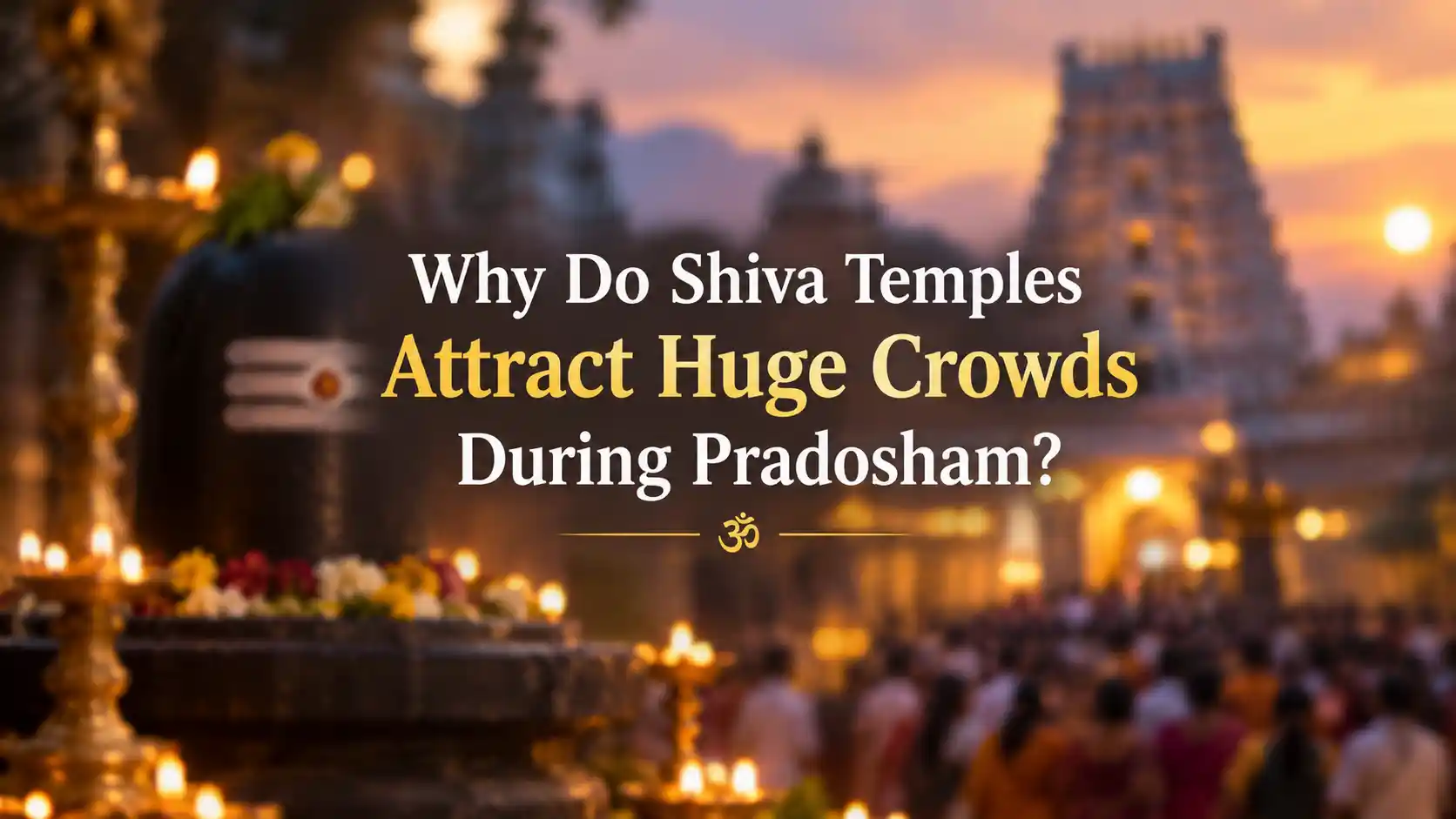
Have you ever noticed something mysterious about Shiva temples on Pradosham?
On an ordinary day, a temple may be peaceful and relatively quiet. But when Pradosham arrives, the scene can completely change. Devotees begin arriving long before the special worship begins. The temple corridors become filled with people. The sound of bells echoes through the shrine, and “Om Namah Shivaya” resonates through the air.
And in front of Nandi, countless devotees stand with folded hands, carrying something invisible but deeply precious—a prayer, a hope, and a wish.
But why do so many people specifically wait for Pradosham to offer their prayers? Is there something spiritually special about this sacred time? And why do devotees believe that a heartfelt prayer made during Pradosham can reach Lord Shiva with extraordinary spiritual power?
What Makes Pradosham So Special?
Pradosham is traditionally observed on the Trayodashi tithi, the 13th lunar day, and Shiva worship during the evening twilight period is given special significance.
The word itself is associated with a sacred period of worship around sunset. This makes Pradosham different from an ordinary temple visit. It is not simply another evening—it is a sacred meeting point of time, devotion, and prayer.
For devotees, this particular period is considered especially auspicious for remembering Lord Shiva and seeking His grace.
The Belief: “Pradosham Prayer Never Goes Unheard”
This is perhaps the strongest belief surrounding Pradosham.
Devotees traditionally believe that prayers offered to Lord Shiva with sincere devotion during Pradosham carry special spiritual significance. Some devotees go even further and believe that wishes placed before Shiva during this sacred time can find their fulfillment sooner, especially when the prayer comes from a pure and sincere heart.
- “Pradosham is the time to ask… but with complete faith, surrender, and devotion.”
This is a spiritual belief, not a guarantee that a particular wish will be fulfilled within a specific time. Yet for generations, this belief has inspired devotees to bring their deepest hopes to Shiva on Pradosham.
Why Does Nandi Become So Important During Pradosham?
If you have visited a Shiva temple during Pradosham, you may have noticed something special: the crowd around Nandi can be extraordinary.
Nandi is traditionally regarded as Shiva’s devoted attendant and vehicle, constantly facing the Lord. So during Pradosham, Nandi worship becomes an essential part of the devotional experience in many Shiva temples.
- Devotees stand before Nandi with folded hands and offer their prayers.
- Nandi represents unwavering devotion—always facing Shiva, never turning away.
- His presence sends a clear spiritual message: when life becomes confusing, keep your inner direction towards the Divine.
The Twilight Mystery of Pradosham
There is another reason this time feels so powerful. Pradosham worship is associated with the twilight period, the transition between day and night.
In many spiritual traditions, transitional moments are considered significant because they represent a movement from one state to another:
- Day becomes night.
- Activity becomes stillness.
- Outer life begins to quiet down.
- Devotees turn their attention inward towards Shiva.
Pradosham reminds us that every transition can become a doorway to something sacred. Perhaps that is why the evening prayer feels different.
Why Do People Bring Their Deepest Wishes to Shiva?
Everyone who enters a Shiva temple during Pradosham carries a unique story.
- Someone may be praying for their family.
- Someone may be waiting for an important opportunity.
- Someone may be hoping for a difficult situation to change.
- Someone may simply want peace.
- Someone may have been silently praying for the same thing for months.
When they stand before Shiva, the prayer may be as simple as: “Shiva… you know what is in my heart.”
That is the emotional power of Pradosham devotion. You don’t need hundreds of words; a sincere heart can say everything.
Why Is Shiva Associated With Removing Difficulties?
Lord Shiva is worshipped in Hindu traditions through many powerful forms and names. He is Mahadeva, Neelakantha, and Rudra—the compassionate Lord who is also associated with transformation and dissolution.
The story of Shiva taking the halahala poison during the churning of the cosmic ocean is traditionally remembered as an example of His willingness to bear difficulty for the protection of creation.
For devotees, this carries a powerful message: “Whatever bitterness life brings, may Shiva give me the strength to face it.”
So a Pradosham prayer is not only about asking for a wish. It can also be a prayer for strength, courage, and transformation.
When the Temple Comes Alive
As Pradosham worship begins, the temple atmosphere undergoes a complete transformation:
- The ringing of brass bells
- The fragrance of incense and fresh flowers
- The glow of traditional oil lamps
- The chanting of Shiva mantras
- The sight of Nandi facing the sanctum
- The sacred abhishekam of the Shiva Linga
Everything comes together to create an atmosphere deeply connected with devotion. And when hundreds of devotees chant “Om Namah Shivaya” together, an individual prayer can suddenly feel like part of something much greater.
One temple. Hundreds of people. Thousands of hopes. One Divine presence.
Why Is Abhishekam So Important During Pradosham?
Abhishekam is a primary form of Shiva worship where water, milk, honey, and other traditional sacred offerings are poured onto the Shiva Linga as part of the ritual.
For devotees, watching the abhishekam can become a deeply contemplative experience. The flowing water symbolically reminds us of something simple: Let the worries flow away. Let the mind become clear.
The ritual does not mean that problems automatically disappear. Rather, it gives devotees a sacred moment to pause, pray, and surrender their worries to Shiva.
What Makes a Pradosham Prayer Feel So Powerful?
Perhaps it is not one single thing, but a combination of several sacred elements:
- A traditionally significant tithi
- Dedicated Shiva worship
- Nandi darshan
- Mantra chanting
- Abhishekam rituals
- Sacred lamps and offerings
- Sincere devotion and complete surrender
Together, these create a powerful devotional atmosphere. And that is why devotees believe: “If you have a heartfelt prayer, Pradosham is a special time to place it before Shiva.”
Is Pradosham Only About Getting Our Wishes Fulfilled?
This is where the deeper spiritual meaning begins.
We may enter the temple asking: “Shiva, give me what I want.”
But after standing before Him, our prayer may slowly change into: “Shiva, give me what is right for me.”
That is a profound shift. Devotion is not merely about getting an answer; it is also about developing the faith to accept the Divine path. Sometimes the blessing is not receiving exactly what we asked for, but receiving the strength and clarity to move forward.
The Sacred Belief of Quickly Answered Prayers
There is a beautiful belief among Shiva devotees that Pradosham is a powerful window for prayer. When the mind is focused, the heart is sincere, and the prayer is offered with deep bhakti, devotees believe that their wishes can move towards fulfillment more quickly.
Whether the answer comes exactly as expected or through an unexpected path is left to one’s faith. But the tradition encourages one thing above all:
- Pray with faith.
- Act with sincerity.
- Leave the outcome to Shiva.
Why Does the Crowd Keep Coming Back?
Maybe the answer is hidden in the prayers themselves.
People return because they have hope. They return because they believe. They return because Pradosham has become a sacred rhythm in their lives. And sometimes, they return simply because standing before Shiva gives them the courage to face another day.
The crowd is therefore more than a crowd—it is a gathering of faith. Hundreds of people may stand together, but every folded hand carries a different story.
Conclusion: The Real Power of Pradosham
Perhaps the greatest power of Pradosham is not simply the belief that “a wish will come true quickly.” It is the belief that when we sincerely place our worries, hopes, and dreams before Shiva, we do not have to carry them with the same heaviness.
We pray. We surrender. We trust. And then we continue our journey.
“Pradosham is the sacred hour when a prayer becomes an offering, hope becomes faith, and the heart simply whispers—’Mahadeva, you know what I need.'”
The next time you see a huge crowd gathering at a Shiva temple during Pradosham, look a little closer. Behind every person standing in that queue is a story. Behind every folded hand is a prayer. Behind every “Om Namah Shivaya” is a hope.
Stand before Shiva. Speak from your heart. Ask with faith. Surrender with devotion. And believe that the Divine will guide your path.