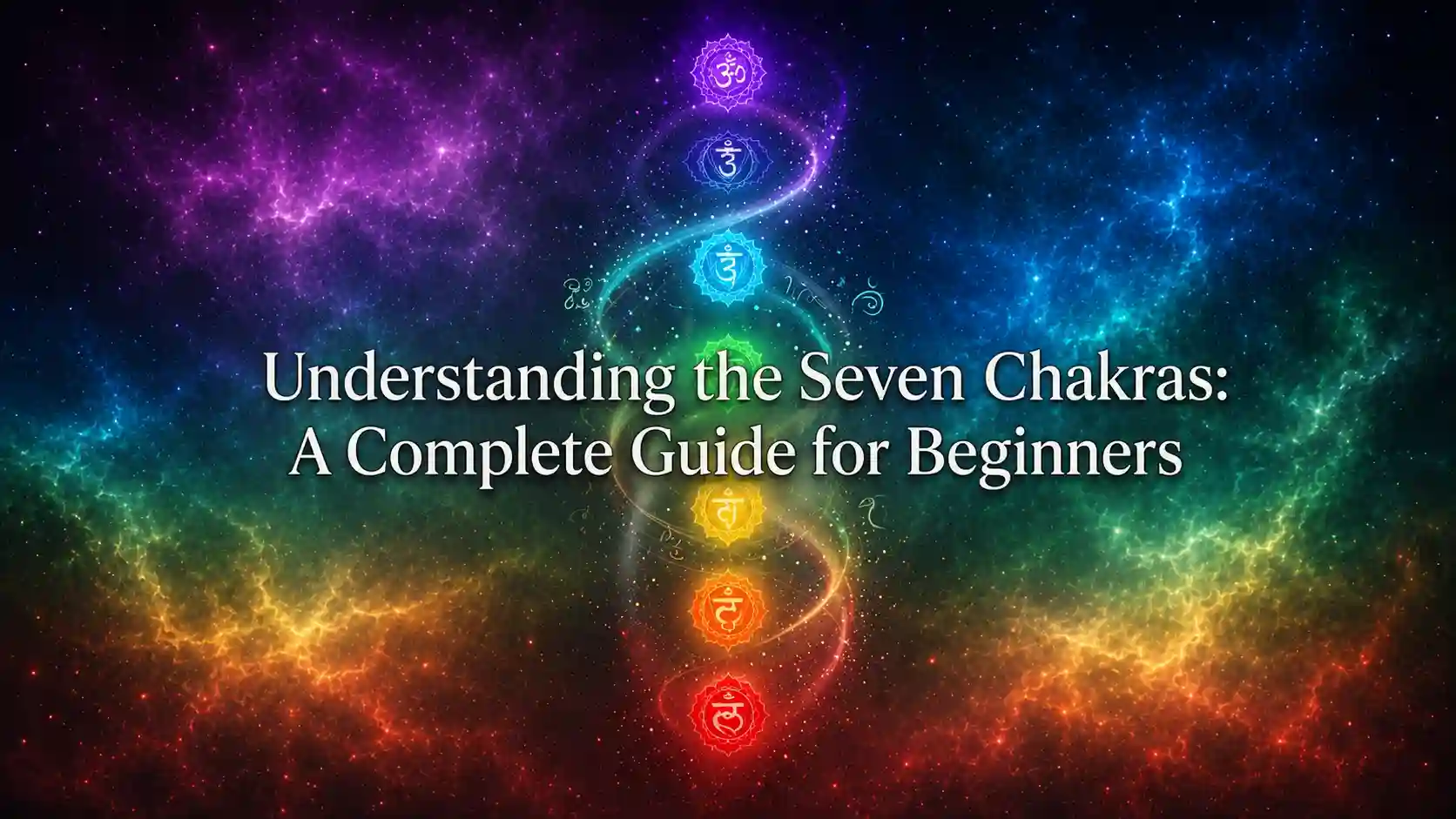
What Are the Seven Chakras?
Have you ever entered a space and immediately felt peaceful? Or met someone whose presence felt peaceful even before they spoke? Many spiritual traditions believe that this invisible experience is connected to the body’s energy centers, known as the Seven Chakras.
The word “Chakra” comes from the ancient Sanskrit language and means “wheel” or “circle.” These spinning energy centers are believed to regulate the flow of life force energy—often called Prana—throughout the body.
Although chakras cannot be seen with the naked eye, they have been described for thousands of years in yogic and spiritual traditions as an important part of maintaining harmony between the body, mind, emotions, and spirit.
If you’re completely new to chakras, this guide will help you understand what they are, where they are located, and why they matter.
Why Are the Seven Chakras Important?
Think of your body as a beautiful musical instrument.
Every chakra represents a different note.
When all seven notes are perfectly tuned, the music is beautiful.
If even one note is out of tune, the entire melody changes.
Your chakras work in much the same way, influencing one another as energy flows through the body.
Balanced chakras may help you experience:
- Greater emotional stability
- Better focus
- Healthy relationships
- Increased confidence
- Inner peace
- Spiritual awareness
When one chakra becomes blocked or overactive, its imbalance may influence the entire energy system.
Where Are the Seven Chakras Located?
The seven major chakras are positioned along the spine, beginning at its base and extending to the crown of the head.
Each chakra is connected with certain emotions, traits, and parts of life.
1. Root Chakra (Muladhara)
Location: Base of the Spine
Color: Red
Element: Earth
The Root Chakra is your foundation.
It represents safety, survival, stability, and security.
A balanced Root Chakra helps you feel grounded and confident.
When blocked, you may experience fear, anxiety, financial insecurity, or a lack of stability.
2. Sacral Chakra (Svadhisthana)
Location: Lower Abdomen
Color: Orange
Element: Water
This chakra governs creativity, emotions, pleasure, and relationships.
When balanced, you feel emotionally healthy and inspired.
When blocked, emotional instability, guilt, or creative blocks may arise.
3. Solar Plexus Chakra (Manipura)
Location: Upper Abdomen
Color: Yellow
Element: Fire
This chakra is associated with confidence, motivation, self-esteem, and personal power.
Balanced energy here encourages courage and decision-making.
Imbalance may lead to self-doubt or a lack of motivation.
4. Heart Chakra (Anahata)
Location: Center of the Chest
Color: Green
Element: Air
The Heart Chakra links the lower energy centers with the upper energy centers.
It represents unconditional love, compassion, kindness, forgiveness, and emotional healing.
A balanced Heart Chakra encourages meaningful relationships and empathy.
5. Throat Chakra (Vishuddha)
Location: Throat
Color: Blue
Element: Ether (Space)
This chakra governs communication and self-expression.
When balanced, you speak honestly and confidently.
When blocked, you may struggle to express your thoughts or feelings.
6. Third Eye Chakra (Ajna)
Location: Between the Eyebrows
Color: Indigo
Element: Light
The Third Eye Chakra is associated with intuition, wisdom, imagination, and insight.
Balanced energy enhances clarity, awareness, and spiritual perception.
7. Crown Chakra (Sahasrara)
Location: Top of the Head
Color: Violet or White
Element: Cosmic Consciousness
The Crown Chakra symbolizes spiritual awakening and divine connection.
When balanced, it promotes inner peace, purpose, and a deeper understanding of life.
How Do the Seven Chakras Work Together?
The chakras are not separate systems.
They function as one interconnected energy network.
Imagine a row of dominoes.
If the first one falls, each domino affects the next.
Similarly, an imbalance in the Root Chakra may influence the Sacral Chakra, then the Solar Plexus Chakra, and so on.
When energy flows freely through all seven chakras, the body and mind experience greater harmony.
Indicators that your chakras may not be in balance
Although everyone’s experience is unique, common signs include:
- Constant fatigue
- Lack of confidence
- Anxiety
- Difficulty expressing emotions
- Relationship challenges
- Emotional overwhelm
- Feeling disconnected from yourself
- Lack of motivation
- Mental confusion
These signs do not necessarily indicate chakra imbalance alone, but many spiritual traditions associate them with disruptions in energy flow.
Simple Ways to Balance Your Chakras
You don’t need to become a yoga master to begin working with your chakras.
Here are a few beginner-friendly practices:
Meditation
Regular meditation helps calm the mind and encourage balanced energy flow.
Breathwork
Deep breathing practices may help improve awareness and relaxation.
Yoga
Certain yoga poses are traditionally associated with stimulating specific chakras.
Positive Affirmations
Daily affirmations can reinforce healthy emotional patterns.
Nature
Walking barefoot on the earth, spending time in sunlight, and connecting with nature may help you feel grounded.
Mindful Living
Acts of gratitude, forgiveness, honesty, and compassion naturally support emotional and spiritual balance.
Can You Open All Seven Chakras at Once?
Many beginners believe they should “open” all seven chakras immediately.
However, most spiritual traditions suggest a different approach.
Rather than forcing chakras open, the goal is to create balance.
As your awareness grows through meditation, mindfulness, and healthy living, your energy naturally becomes more harmonious.
Spiritual growth is a journey—not a race.
Frequently Asked Questions
Are chakras scientifically proven?
Chakras originate from ancient spiritual traditions and are not established as anatomical structures in modern medicine. Many people use them as a framework for meditation, self-reflection, and personal well-being.
Which chakra should beginners focus on first?
Many teachers recommend starting with the Root Chakra, as it is associated with grounding, stability, and building a strong energetic foundation.
How Soon Can You Experience Chakra Balance?
There is no fixed timeline. Consistent practices such as meditation, breathwork, yoga, and mindful living may support a gradual sense of balance over time.
The Seven Chakras offer a timeless spiritual framework for understanding the relationship between the body, mind, emotions, and inner awareness. Whether you approach them through meditation, yoga, or simple self-reflection, they can encourage greater balance and mindfulness in daily life.
Remember, the purpose of working with the chakras is not perfection or instant transformation. It is about becoming more aware of yourself, cultivating inner harmony, and allowing personal growth to unfold naturally.