In everyday life, we all experience moments when fear, confusion, delays, or unexpected problems make us feel unsettled. At such times, Bhairava worship is traditionally believed to help devotees develop the mental strength to face difficulties rather than run away from them.
But why is Lord Bhairava worshipped so widely?
The answer goes beyond simply asking for problems to disappear.
Who Is Lord Bhairava?
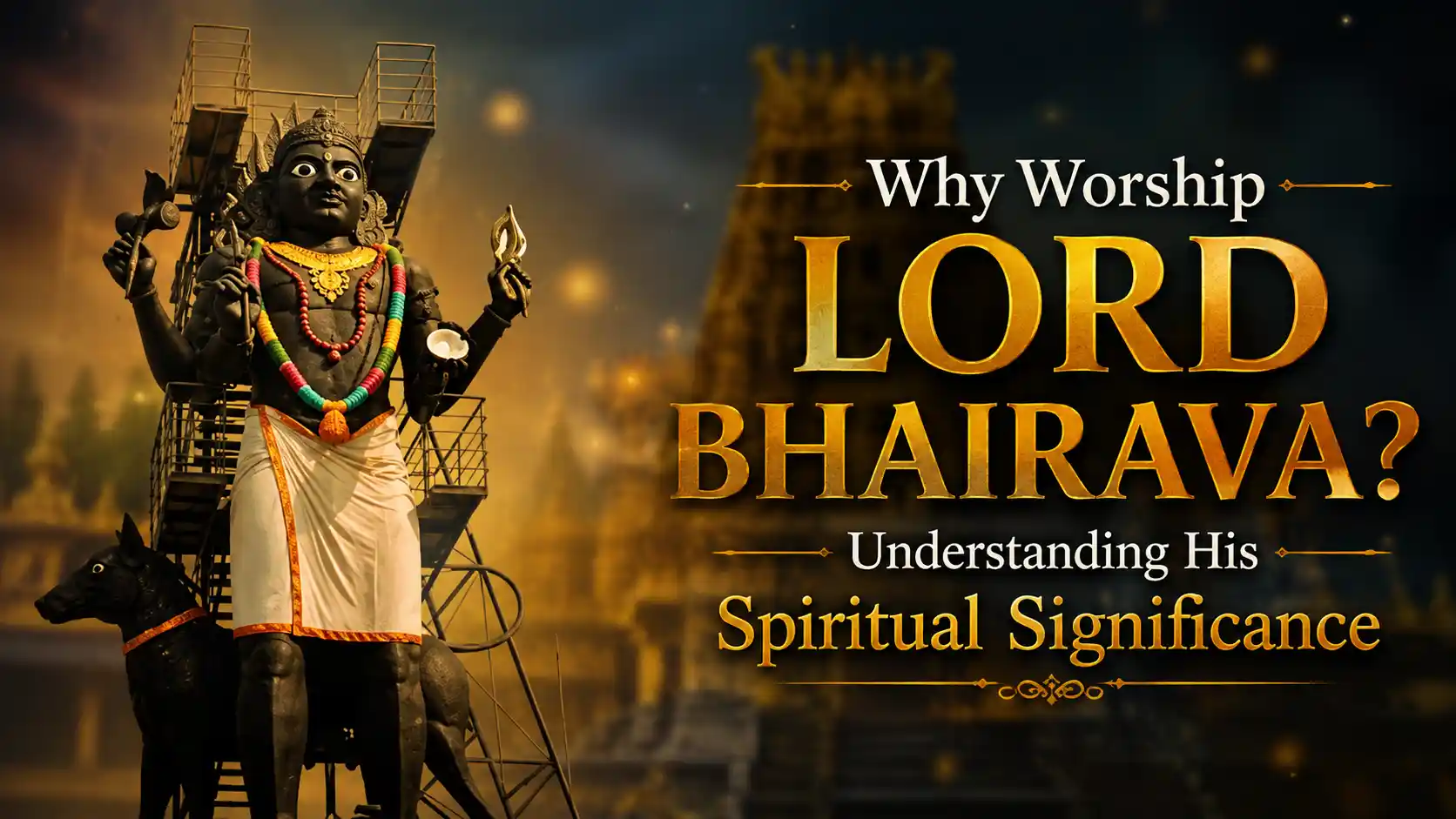
Lord Bhairava is regarded as a fierce manifestation of Lord Shiva. The word Bhairava is traditionally associated with fearlessness and the power to overcome fear.
His appearance can initially seem intense—with a powerful expression, weapons, and a guardian-like presence. However, devotees understand this form differently. The fierceness of Bhairava is not viewed as cruelty. Instead, it represents the destruction of negative forces, fear, ignorance, and obstacles.
This is one reason Bhairava is traditionally regarded as a guardian deity.
For a devotee, looking at Bhairava can serve as a reminder:
Fear should not control our decisions. We need the courage to face life as it comes.
Why Do People Worship Lord Bhairava?
People approach Bhairava for different reasons. Some visit temples regularly, while others turn to Bhairava worship during challenging periods of their lives.
Traditional belief connects his worship with several spiritual qualities.
1. For Courage and Fearlessness
Fear can influence almost every part of life.
It may be fear of failure, uncertainty about the future, financial worries, difficult situations, or simply the feeling that we are not strong enough to handle what is ahead.
Bhairava worship is traditionally associated with courage and fearlessness.
The purpose is not necessarily to eliminate every difficult situation. Instead, devotion can help a person cultivate the confidence to face those situations with a steadier mind.
This is where Bhairava worship can become a meaningful personal practice rather than just a ritual.
2. For Protection
Lord Bhairava is traditionally revered as a protector and guardian.
Many devotees believe that sincere worship creates a sense of spiritual protection from negative influences and harmful forces.
In temples, Bhairava is also associated with guarding sacred spaces. This guardian symbolism has made him particularly important in Shaiva traditions.
For devotees, this aspect of Bhairava often represents something very simple:
“I am not alone when I face difficulties.”
That feeling itself can bring considerable emotional strength.
3. To Overcome Obstacles
Life rarely moves exactly according to our plans.
Unexpected delays, misunderstandings, financial difficulties, professional challenges, and personal struggles can appear without warning.
Bhairava worship is traditionally performed by devotees who seek divine support while going through such obstacles.
However, devotion should not be understood as a substitute for practical action.
A healthy spiritual approach is to pray for clarity and strength while continuing to take the necessary steps in real life.
4. To Develop Discipline
One lesser-discussed aspect of Bhairava worship is discipline.
Bhairava is not only associated with power. His symbolism can also remind devotees about responsibility, self-control, and awareness of one’s actions.
Regular prayer, visiting a temple, observing a personal spiritual routine, or participating in traditional poojas can create a sense of discipline in everyday life.
Even a few quiet minutes of prayer can become a valuable pause in an otherwise busy routine.
5. For Spiritual Strength During Difficult Times
Sometimes the biggest problem is not the situation itself but our reaction to it.
When the mind becomes restless, even a small problem can feel overwhelming.
Bhairava devotion is traditionally viewed as a way of seeking inner strength and mental steadiness.
Many devotees find that prayer gives them a moment to slow down, reflect, and regain confidence.
That personal experience is an important part of devotional practice.
Why Is Kala Bhairava Worship Considered Special?
Among the various forms of Bhairava, Kala Bhairava holds a particularly important place in Hindu tradition.
Kala Bhairava is strongly associated with time, discipline, and the proper use of one’s life.
Time is something nobody can recover once it has passed. This makes Kala Bhairava worship symbolically meaningful.
His worship can remind us to:
- Respect time
- Avoid unnecessary distractions
- Take responsibility for our actions
- Use opportunities wisely
- Maintain discipline in daily life
In this sense, Kala Bhairava is not only worshipped as a divine protector but also remembered as a reminder of the value of time.
When Do Devotees Worship Bhairava?
Bhairava can be worshipped on different occasions according to individual family and temple traditions.
Ashtami, particularly Krishna Paksha Ashtami, is traditionally associated with Bhairava worship. Kala Ashtami is also observed by devotees in several traditions.
Many devotees also visit Bhairava temples on Saturdays or on days considered significant according to their personal spiritual practice.
The exact rituals and timings can vary between temples and traditions, so devotees generally follow the practices of their chosen temple or spiritual tradition.
What Offerings Are Traditionally Made to Bhairava?
Offerings differ according to temple customs and regional traditions.
Common devotional practices may include:
- Lighting lamps
- Offering flowers
- Performing archana
- Offering traditional naivedyam
- Chanting Bhairava mantras
- Participating in abhishekam
- Circumambulating the shrine
- Offering prayers with sincerity
The important point is that devotion is not measured simply by the number or cost of offerings.
Sincerity, faith, discipline, and a peaceful mind are central to personal worship.
Is Bhairava Worship Only for Removing Problems?
Not necessarily.
This is an important distinction.
Many people first discover Bhairava when they are going through difficulties. But traditional Bhairava worship is not limited to asking for relief from problems.
Devotees may also worship Bhairava for:
Protection + Courage + Discipline + Clarity + Spiritual Growth
Instead of viewing worship only as a way to obtain something, it can also become a way to strengthen one’s approach to life.
That shift in perspective can make devotional practice more meaningful.
A Simple Way to Approach Bhairava Worship
You do not always need an elaborate ritual to begin a personal devotional practice.
A simple approach could be:
- Clean yourself and the prayer space.
- Light a traditional lamp if appropriate to your practice.
- Sit quietly for a few moments.
- Remember Lord Bhairava with devotion.
- Chant a Bhairava prayer or mantra according to your tradition.
- Express your concerns honestly.
- Pray for courage, clarity, and the strength to do what is right.
- End the prayer peacefully.
The intention behind the worship matters greatly.
Rather than praying only, “Remove this problem,” one can also pray:
“Give me the strength and wisdom to face this situation correctly.”
That simple change can make the experience of prayer deeply personal.
What Can We Learn From Lord Bhairava?
Beyond religious rituals, Bhairava’s symbolism offers several life lessons.
Courage
Do not allow fear to decide your future.
Discipline
Use your time carefully and remain responsible for your actions.
Awareness
Think before acting and understand the consequences of your choices.
Strength
Difficult periods can become opportunities to develop inner resilience.
Protection
True protection can also mean learning to protect your mind from fear, negativity, and unhealthy distractions.
These values explain why Bhairava continues to hold an important place in devotional traditions.
Bhairava Worship as a Personal Spiritual Experience
Every devotee may experience worship differently.
For one person, visiting a Bhairava temple may bring peace. For another, chanting a prayer at home may provide a sense of stability. Someone else may find strength simply by sitting quietly before the deity.
There is no need to compare one person’s devotional experience with another’s.
What matters is the sincerity with which the practice is approached.
Over time, regular spiritual practice can become a quiet space where we pause, reflect, and gather ourselves before returning to everyday responsibilities.
Final Thoughts
Why worship Lord Bhairava?
For many devotees, the answer is deeply personal.
Bhairava represents the courage to face fear, the discipline to respect time, the strength to overcome difficulties, and the protective power associated with Lord Shiva.
His fierce appearance may seem intimidating at first, but within the devotional tradition, that fierceness carries a deeper meaning. It represents the destruction of fear, negativity, ignorance, and obstacles.
Ultimately, Bhairava worship is not simply about asking life to become easier.
It can also be about becoming stronger, more disciplined, more courageous, and spiritually grounded while facing life.
That is perhaps why devotees continue to turn to Lord Bhairava—not only when they need help, but also when they seek the inner strength to walk their path with confidence.
Frequently Asked Questions
1. Why do people worship Lord Bhairava?
People traditionally worship Lord Bhairava for courage, protection, discipline, spiritual strength, and support while facing challenges in life.
2. Is Lord Bhairava a form of Lord Shiva?
Yes. In Hindu tradition, Bhairava is regarded as a fierce manifestation of Lord Shiva and is associated with protection and the destruction of negative forces.
3. Which day is associated with Bhairava worship?
Ashtami, particularly Krishna Paksha Ashtami, is traditionally associated with Bhairava worship. Specific observances vary according to regional and temple traditions.
4. What is Kala Bhairava associated with?
Kala Bhairava is traditionally associated with time, discipline, protection, and awareness of how one uses one’s life.
5. Can Bhairava be worshipped at home?
Yes. Devotees may follow simple home worship according to their family or spiritual tradition. Temple-specific rituals should be performed according to the respective temple’s customs.
6. What is the main spiritual message of Bhairava worship?
A central message is to overcome fear, develop courage, maintain discipline, and face life’s challenges with awareness and inner strength.